

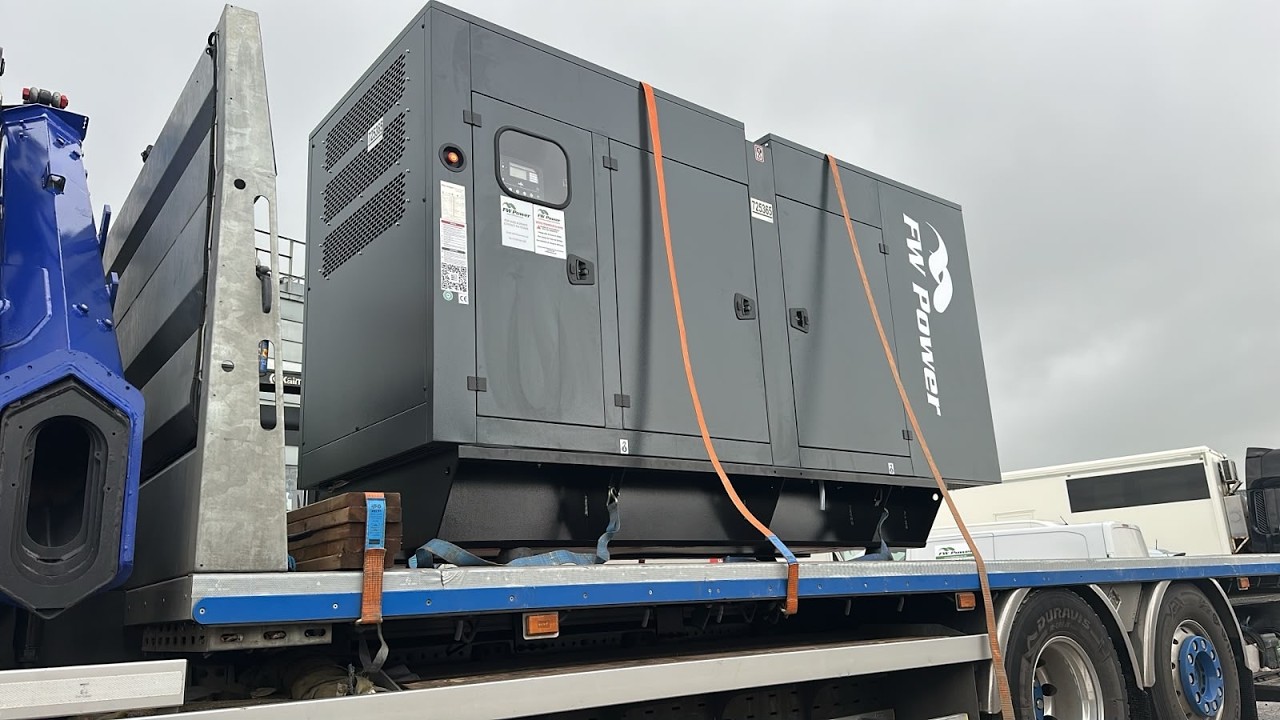
Blackwell B220 project specification
- Generator
- Blackwell B220 diesel generator
- Prime power rating
- 200 kVA
- Standby power rating
- 220 kVA
- Application
- Industrial manufacturing backup power
- Location
- Worcestershire, United Kingdom
- Transfer equipment
- Automatic Transfer Switch (ATS)
- Installation
- FW Power Generators
An industrial power requirement, defined by the machinery
The starting point for this project was the manufacturing process. The facility needed standby generation to support production equipment, including CNC machinery and an air compressor, with potential growth to six CNC machines included in the planning brief.
A site survey informed the selection of the Blackwell B220. Reviewing the equipment and its starting requirements helped establish an appropriate generator rating for the intended backup duty. The result was a specification centred on 200 kVA prime and 220 kVA standby power, together with an Automatic Transfer Switch.
What the 220 kVA standby rating means
The B220 has two stated outputs: 200 kVA prime and 220 kVA standby. They describe different operating duties. For this manufacturing backup power application, the standby rating is relevant to the role of supporting agreed loads when the normal supply is unavailable.
The 220 kVA figure should not be treated as a continuous prime-power rating or as a guarantee that every connected machine can start simultaneously. The required duty, running load, starting demand and operating conditions must be assessed together. For regular generator-powered production, the prime rating and the applicable operating limits need their own review.
Selecting a diesel generator for CNC machinery
A CNC workshop combines several types of electrical demand. Machine drives and controls, associated equipment and shared services can have different running and starting characteristics. Adding machine nameplate ratings alone does not establish how the workshop will behave on generator power.
For a similar project, the technical review should establish which machines must operate together, how they restart after a power interruption and what voltage and frequency variation their manufacturers permit. That information helps assess the complete generating set, including its response to load changes, rather than selecting solely by headline kVA.
- Identify the essential production loads and supporting services.
- Record machine input ratings, starting methods and the expected operating sequence.
- Review simultaneous demand and the largest load step.
- Check power quality requirements with the machinery supplier.
Why compressor starting loads matter
The compressor starting requirement was part of the site assessment. A motor can draw substantially more current during starting than it does in normal operation. If that event coincides with other production loads, it can determine the generator capacity or restart sequence needed.
The starting method, whether the compressor starts loaded or unloaded, and the other equipment already online all affect the assessment. Confirming these details helps the specifying team assess motor-starting capability against the proposed generator configuration.
Planning for potential expansion to six CNC machines
The brief considered a possible increase to six CNC machines. Allowing for expansion means understanding the proposed equipment mix and how it would operate, rather than simply reserving an arbitrary percentage of the generator rating.
The demand from six machines depends on their individual ratings, utilisation, simultaneous operation and shared services such as compressed air. Any expansion should be checked against the agreed load schedule and starting sequence before additional machines are connected. Considering six CNC machines during selection is not a blanket claim that the B220 can power every six-machine configuration.
Automatic transfer equipment within the power specification
An Automatic Transfer Switch forms part of this project. In a suitably configured standby system, the controls coordinate generator starting and transfer of the protected circuits once the alternative supply is available. The switchgear and control arrangement must suit the electrical design and the required load.
Automatic transfer does not by itself provide an uninterrupted supply. Manufacturing teams should plan how CNC controls, machine cycles and other equipment recover following an outage. Loads that require continuous ride-through may need a separately assessed UPS or another appropriate solution.
Blackwell for commercial and industrial power applications
This application shows how a Blackwell generator can be selected around a practical industrial requirement: an identified load, a defined duty and an allowance for future operational change. The same approach supports equipment selection for commercial premises, workshops and other production facilities.
Blackwell is a British diesel generator brand owned and distributed by FW Power Generators. Buyers and specifying engineers can discuss the required output, component specification and technical documentation with the Blackwell team. Dealers can use the same application-led approach when developing generator proposals for their own customers.
Build your industrial diesel generator specification
For a manufacturing backup power enquiry, provide an equipment schedule, the largest motor and its starting method, essential loads, operating hours and any planned expansion. Include the site conditions and transfer requirements so the proposed generator can be assessed as part of the wider power system.
Ask for the technical specification of the proposed Blackwell configuration, including the engine, alternator, controls and applicable performance data. Use that documentation to confirm the equipment matches your operating requirements before finalising the selection.
Explore the generator range
Compare the Blackwell catalogue and request model-specific technical documentation for your application. Explore Blackwell diesel generators.
Installation by FW Power Generators
FW Power Generators undertook the installation. For delivery, positioning and electrical integration, read the dedicated installation account. Visit FW Power’s Worcestershire installation case study.